


 New & Notable
AI-Ready Executives Reinvent Their Organizations
- Details
- Wednesday, 14 October 2026 20:18
 October 14, 2026 – As Canadian organizations implement AI at scale, CIOs face increasing pressure to deliver measurable business outcomes while balancing cost, governance, and execution. The challenge is no longer identifying AI opportunities, but building the engineering capability and the workforce needed to deploy AI successfully across the enterprise.
CIOs must also reinvent their technology organizations to become more agile, skills-driven, and business-focused. Success will depend not only on adopting AI, but on building the leadership, operating models, and AI economics needed to innovate and deliver measurable business value.
With these principles in mind, The IT Media Group brought together 20 cross-industry IT executives for a roundtable entitled "The AI-Ready CIO – Reinventing Technology Organizations."
Jeff Ishii, Chief Technologist at The IT Media Group, moderated the roundtable. Also participating were executives from the session sponsor, Andela: CEO Carrol Chang and Head of Research, Cory Hymel.
The roundtable discussion focused on four key themes about the practical choices, trade-offs, and lessons learned as leaders prepare their organizations for the next phase of AI-driven transformation:
1. Solving Talent Debt Through Skills-Based Workforce Transformation
- Skills intelligence as a strategic capability
- Balancing reskilling while maintaining delivery capability
2. Accelerating Enterprise AI
- Priority areas that improve production AI
- Building an AI centre of expertise
3. Modernizing Technology Delivery Capability
- Balancing internal capability development with external expertise
- Modernizing talent as the foundation for AI
4. Building an Adaptive CIO Leadership Model
- Preparing the workforce for continuous AI-driven change
- Balancing the economics of AI
Carrol Chang identified three priorities emerging from the roundtable: demonstrating financial returns on AI investments, upskilling existing employees, and governing the rapid growth of citizen-developed AI applications. She observed that CIOs have moved beyond concerns about safely procuring AI tools to asking whether those investments are delivering measurable value. Chang emphasized that developing internal talent is both more practical and sustainable than competing for scarce AI expertise, while warning that the rise of “shadow IT” will require CIOs to balance grassroots innovation with security, compliance, and scalability.
Chang urged CIOs to prioritize AI investments that deliver tangible business outcomes while embedding continuous learning into their technology organizations. Summarizing Andela’s value proposition, she stated, “You paid for the AI, and we help you make it pay off.” She advocated a hands-on “player-coach” model that embeds AI-fluent engineers alongside internal teams to build solutions, transfer skills, and accelerate adoption. Her central message was that successful AI transformation requires more than technology investment: organizations must develop their people, modernize workflows, and build the capabilities needed to achieve sustainable ROI.
Cory Hymel highlighted the value of candid discussions among CIOs who openly shared “not just the wins, but the losses” associated with AI adoption. Three challenges emerged: balancing innovation with governance and security, managing unpredictable AI costs, and developing an AI-ready workforce. Hymel emphasized that CIOs must establish meaningful measures of AI success, improve visibility into token consumption, and build the organizational capabilities needed to scale AI responsibly.
Hymel recommended that CIOs prioritize targeted upskilling, disciplined AI economics, and access to specialized expertise. Cautioning that “one-size-fits-all training does not work with AI,” he advocated personalized learning and skills assessments to accelerate adoption. He also highlighted Andela’s ability to support these priorities through AI training, token optimization, and its global network of more than 17,000 engineers. Rather than replacing internal talent, Hymel positioned external expertise as “a superpower” that helps organizations overcome capability gaps, accelerate execution, and achieve measurable ROI.
All roundtable participants received a report with more than 160 practical insights on how AI is reshaping workforce capabilities, accelerating technology delivery, and challenging traditional operating models, while emphasizing the need for strong governance and financial discipline. The discussion reinforced that the AI-ready CIO must balance innovation with execution by building an adaptable workforce and scalable technology capabilities that turn AI investments into business value.
For more on how The IT Media Group fosters collaboration amongst the CIO community, please visit our events page. Interested parties can subscribe to our Youtube channel to watch a host of CIO roundtable highlights and executive interviews covering leadership, technology, and operations topics that address compelling issues.
The IT Media Group is an award-winning producer of events and content for senior IT executives. Based in Toronto, our leadership team includes some of the most experienced and well-respected media, technology, and business professionals serving the IT executive community.

New & Notable archive
- ► 2026 (3)
- ► 2025 (5)
- ► 2024 (6)
- ► 2023 (10)
- ► 2022 (7)
- ► 2021 (11)
- ► 2020 (6)
- ► 2019 (7)
- ► 2018 (7)
- ► 2017 (7)
- ► 2016 (11)
- ► 2015 (10)
- ► 2014 (5)
- ► 2013 (9)
- ► 2012 (10)
- ► 2011 (2)
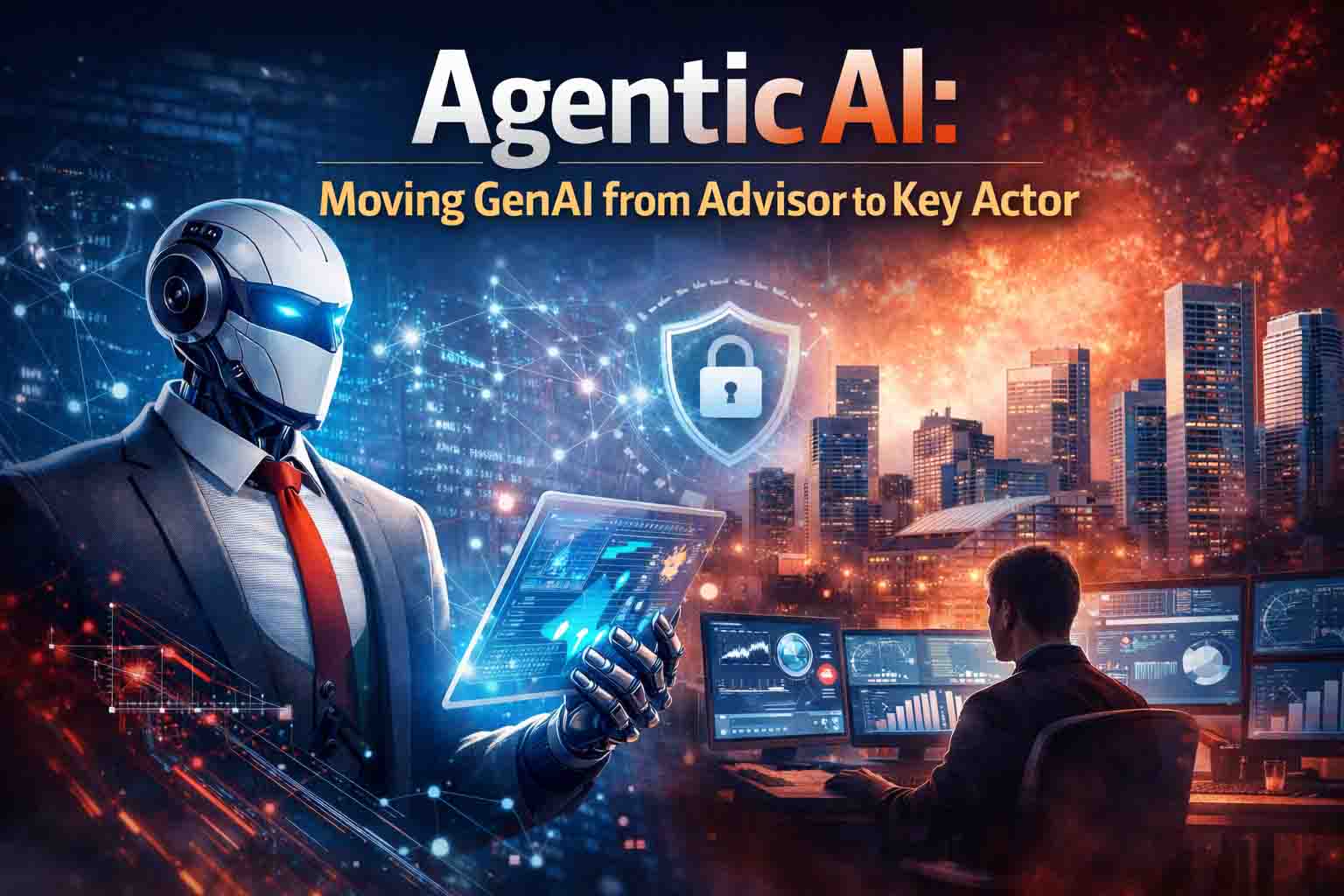 Having an AI advisor that provides recommendations based on your direction can be helpful. But an expert actor that can make decisions and operate with minimal human intervention is even more powerful.
 Insights from Nasheen Liu on the AI Future Leaders Podcast.
 AI is no longer experimental. It’s operational. It’s funded. And it’s expected to deliver. Yet a new global study from Hitachi Vantara reveals a hard truth many CIOs already suspect: AI success is being limited not by algorithms, but by data infrastructure.
 Cyber incidents are no longer isolated IT events. They are enterprise-level crises that can halt operations, trigger regulatory scrutiny and erode customer trust overnight. Yet too often, planning for how to respond is treated as a compliance checkbox or delegated piecemeal across functions.
 Having an AI advisor that provides recommendations based on your direction can be helpful. But an expert actor that can make decisions and work without oversight is even more powerful.
 Artificial Intelligence is no longer a buzzword; it's a daily boardroom reality. CIOs are tasked not only with adopting AI but also with translating their "AI promise" into operational and financial value. However, despite board-level urgency and growing enterprise investments, many AI programs still fail to deliver—not due to lack of ambition, but because of a strategic value gap.
 AI is transforming industries at warp speed, with companies across sectors driven by its potential to accelerate revenue growth, boost operational efficiency and customize customer experiences.
 Salad.
 The Banking, Financial Services, and Insurance (BFSI) sector is witnessing a rapid AI adoption surge, but this digital acceleration comes with significant challenges. According to the
 Why Flexible Infrastructure Consumption is in High Demand and Driving Business Growth